Thursday, 25 December 2014

Understanding scattering cross section


I think I might have a serious misunderstanding of some concepts to do with scattering cross sections and would really appreciate any help.


As far as I can tell the differential cross section is basically a measure of what fraction of particles get scattered into some solid angle. To get the total cross section all we need to do is then integrate over all solid angles. However I can't determine why this wouldn't just be equal to 1 i.e. that we are guaranteed to find the scattered particle at some solid angle. An attempt in my mind to fix this would be to not include the infinitesimal on axis solid angle. However, unless the differential cross section was infinite their, it wouldn't make any difference.


Could anyone tell me what's gone wrong with my reasoning? Much appreciated!


Answer


Scattering cross sections can have other parameters besides angle. For example you commonly have cross sections vs. angle and final energy, $d\sigma/d\Omega\, dE_\text{final}$. This might reflect the fact that in a generic elastic scattering process forward-scattered particles tend to retain most of the beam energy, while backwards-scattered particles must deposit a lot of energy and momentum in the target.


If you're doing purely elastic scattering from a crystal, for example Bragg scattering, the cross section $d\sigma/d\Omega$ will essentially vanish except for some very particular angles. It's the values of those magic angles that are useful, and the relative strengths of scattering at one angle versus another. The fact that the entire incident beam has to go somewhere can sometimes be a useful check, but more often the unscattered / forward-scattered beam gets sent to some beam dump and ignored.

enigmatic puzzle - Consecutive Vowels


Part of the Fortnightly Topic Challenge #35: Restricted Title 1


Potentially NSFW: Consecutive Vowels


  • Being a native speaker (6)


  • _____ goin' nowhere! (3 4)


  • Democratic Debbie (7)


  • Major airplane manufacturer (6)


  • Like the people in the linked comic (assuming bald means male and long hair means female) (8)


  • Like Hal or Cortana (2)


  • Go extinct (3 3)


  • A sign of economic prospering (3 6)


  • Victory (7)


  • He ran with Palin (6)


  • Comedy series by Szekely (5)


  • Closest Hawaiian island to Hawaii (4)


  • ______ in flames (2 2)


  • Not weaknesses (9)


  • He wrote rhymes just like these, he wrote rhymes with much ease! (2 5)


  • Possibly a kid's first existential question? (2 1 3)


  • A promise of return (3)


  • Boyfriend (4)


  • In ____ (instead of) (4 2)


  • Cute, like old people (6)


Your answer is an alternate punchline -- or maybe hovertext? -- for the linked comic.


Answer


Each of the answers


has a string of consecutive vowels somewhere in it, and only that one string of consecutive vowels. (There may be just one vowel!) In addition, those strings are always made up of different vowels.


Taking these


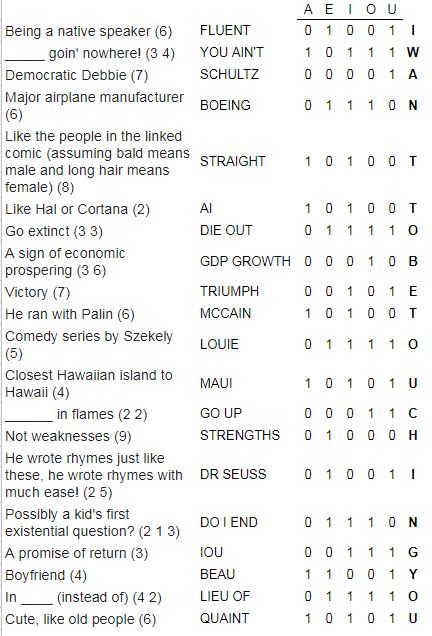
substrings, we can make a 5-bit binary number for each word. Take AEIOU, and write a 1 if the vowel is in that string and 0 if it is not. For instance, the first answer, FLUENT, has an E and a U, so the corresponding number is 01001.
enter image description here

Read off the binary numbers using A=1, B=2, ... Z=26 to get the phrase I WANT TO BE TOUCHING YOU - which describes both the vowels and the characters!


geometry - Join all circles together only with 6 lines


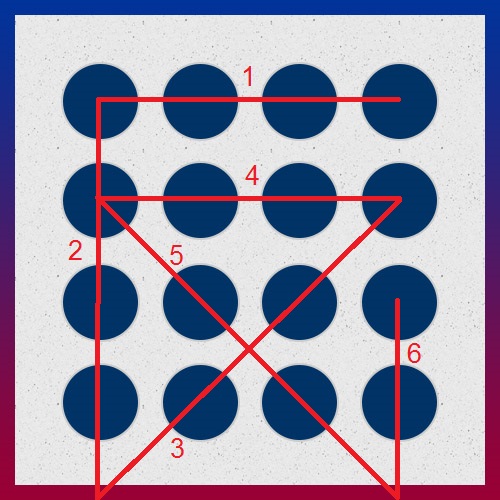
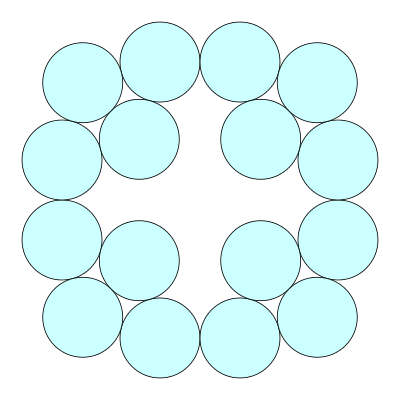
In the below image, can you draw 6 straight lines that pass all the circles?
As soon as you start drawing lines you can't take your pen up until you draw all six lines.
hint: you don't have to keep the polyline inside the square.


Edit: Best answer is the one in which straight line passes center of the circles.


enter image description here


Answer


I think this is one possible solution:


solution


gravity - What is the cause of gravitional force of attraction?


Ok,this is a silly question. But for quite long I have been thinking about this. What is gravitation all about?? My book directly writes since force of gravitation is directly proportional to the masses and inversly proportional to the square of the distance ie. $$F = G\frac{M_1 . M_2}{r^2}$$ . So is this gravitation all about? What is the cause of it? The book then says


We are not in the scope in classical approach so as to discuss the cause of this. However,as a matter of fact that if there are more than one mass,then there is gravitation as it is their fundamental property.( Cause of gravitation can be attributed to exchange of non-classical particles between the masses) .


Then it ended the talkings. What are those non-classical particles? Why and how are they exchanged? So far I have studied physics , I never found such weird phenomenon like this. I want to know what is the cause of gravitation and what is the cause of exchange of those so-called non-classical particles? And how do they do it?


Wednesday, 24 December 2014

logical deduction - Not enough pylons!


Bob is a temp working with a construction company in repairing roads and barriers. One day Bob got called up to repair a barrier along a strip of highway. Bob will need 100 "Company X" pylons to divert traffic away from his site while he repairs. Being the best employee around, Bob goes into work the day before to round up the pylons he needs. After looking everywhere in the warehouse, Bob is only able to find 50 "company X" pylons! He then realized John must have taken the rest and hidden them from Bob. Bob also found a note that says his supervisor will be driving by each site tomorrow for inspection! If his supervisor sees that Bob is not following protocol of using proper pylons, he will surely be fired!


The next day after Bob was clever and did some tricks he was able to finish the repairs without getting fired.


How did Bob save his job?


Notes:


  • Bob has the rest of the day to prepare, and has the supplies in the warehouse to his disposal (But there are no other "Company X" pylons).


  • If Bob tried to use hand craft fake pylons (or non "Company X" pylons), his supervisor would surely notice and Bob would not be following company rules!


  • Bob has already called John asking for pylons but John said he buried them and encrypted the location. (John won't share the encryption, he's said too much already)


  • There is shipment being made to the warehouse in 2 days with more pylons, but this will be too late for Bob.


Answer


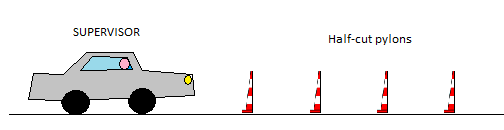
First of all, break the rear-view mirrors of the supervisor's car (admit it, you've always wanted to do that!).
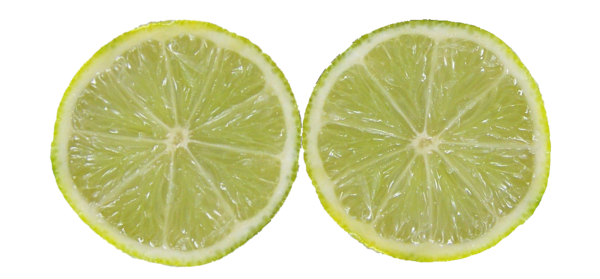
Then, split each pylon into two identical pieces, and place them along the road. Without a rear-view mirror, the supervisor won't notice that the pylons were divided!


enter image description here


Strategy for speedsolving 2048


Once one has mastered winning 2048 in general, it's often an interesting exercise to try to do it as fast as possible.


What strategies are there for speeding up 2048-solving?
For example, how can you pass the boring beginning game quickly (ex. mashing up and left),

and how do you know when to stop so you don't mess up your middlegame?


geometry - Neighboring circles


If we join two circles on a plane, each will have exactly one neighbor.


Neighboring Circles - 1


Given three or more circles, we can build a chain where each circle has exactly two neighbors.


Neighboring Circles - 2


There are also arrangements where each circle has exactly three neighbors, like the one shown here.


Neighboring Circles - 3


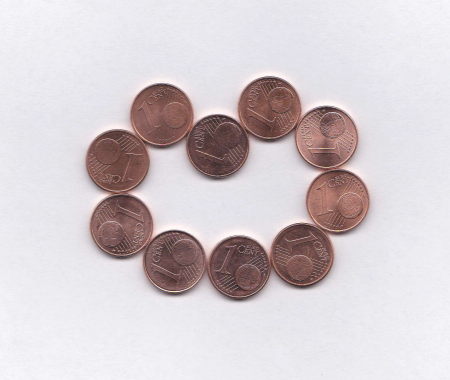
Is it possible to arrange a finite number of equally sized, non-overlapping circles on a plane such that each circle has exactly four neighbors?


What if the circles can have different sizes?


Answer


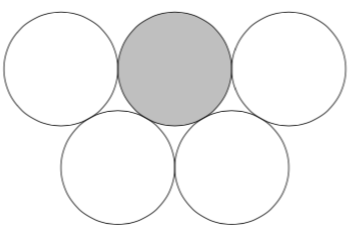
It is not possible when the radii are equal. Consider the topmost circle, C. In order to pack four neighbors around C, none of which are above C, you have to use the below arrangement (where C is the gray circle):


enter image description here


This means there is a circle to the immediate right and left of C. Repeating the same argument over and over shows that there is an infinite line of circles at the same level as C, contradicting the finiteness requirement.


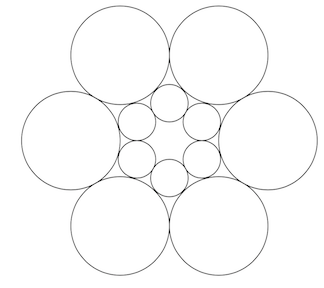
When you allow differing radii, the below arrangement works:


enter image description here


Understanding Stagnation point in pitot fluid

What is stagnation point in fluid mechanics. At the open end of the pitot tube the velocity of the fluid becomes zero.But that should result...